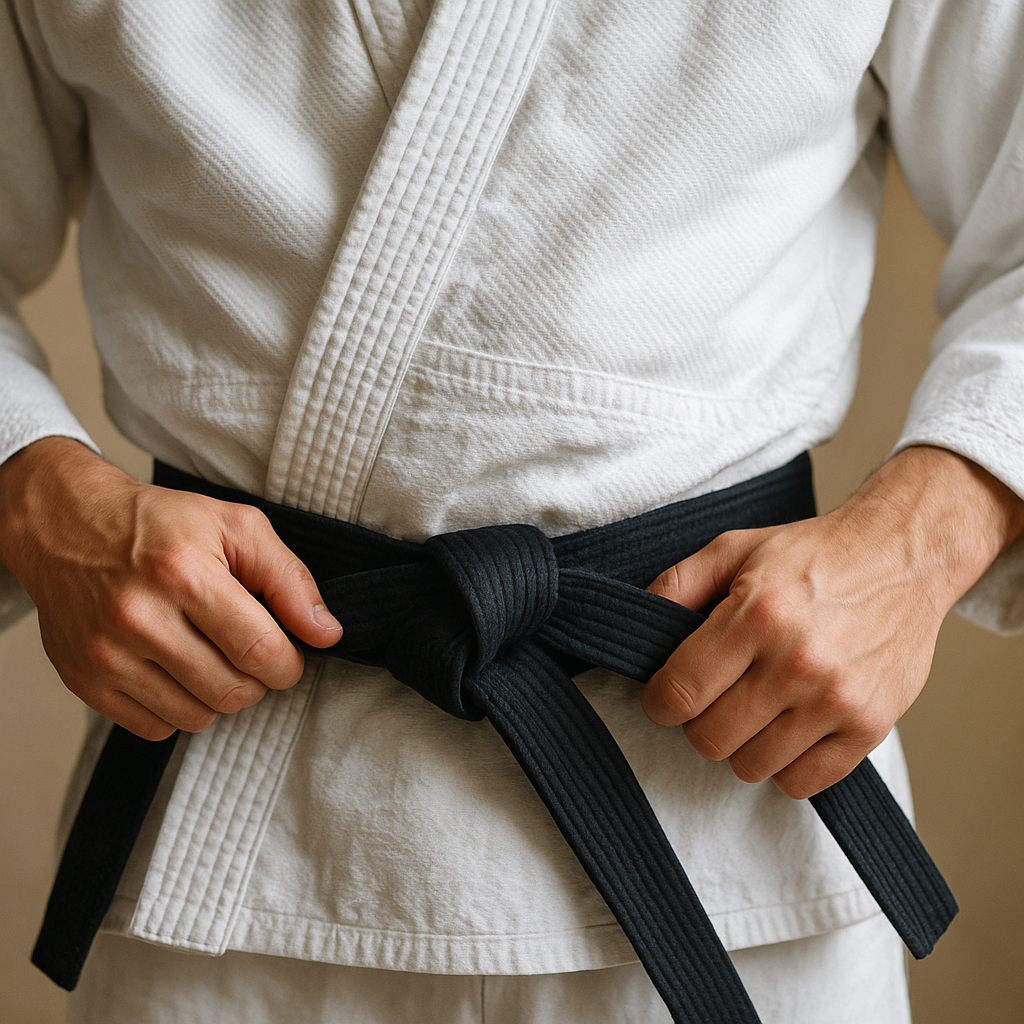
How To Tie A Karate Belt Step By Step For Modern Practitioners
I still remember walking into my first dojo with a brand new uniform and absolutely no clue how to secure it without it unraveling during warm-ups. If you are a guy who just started training or returned after a long break, you already know the struggle. A loose wrap ruins your stucture during throws, while an overtightened knot cuts circulation and kills focus. This guide cuts through the noise and shows you exactly how to tie a karate belt so it stays locked in place without compromising your breathing or mobility.
Why The Knot Actually Matters In Daily Training
Martial arts gear is not just fabric. The traditional obi serves as a visual record of your progress, a grip point for opponents, and a structural anchor for your core. Beginners often treat it like a regular waist tie, but the mechanics demand precision. Over the past century, this simple strip of cotton evolved from practical workwear into a standardized ranking system. What used to be a utilitarian cloth for farm laborers in Okinawa and Japan now follows strict international federation rules. The complexity lies in balancing tradition with modern performance needs.
- Prevents fabric from shifting during dynamic movement
- Reduces friction burns during ground work
- Keeps your jacket securely closed for safety compliance
How To Tie A Jiu Jitsu Belt For Grappling Sessions
When you step onto the grappling mats, the requirements shift. Jiu jitsu uniforms are thicker, and the fabric tends to bunch up if wrapped incorrectly. Start by finding the exact center of the belt, placing it against your navel, and wrapping both ends around your waist twice. Cross the ends in front, tuck the top layer under both layers of the wrap, and pull it tight but not restrictive. This method guarantees stability during heavy clinches and guard passes. If you search for how to tie a gi belt, most tutorials skip the second wrap, which is exactly why belts come loose during live rolling.
Understanding How To Tie A Bjj Belt Without Losing Your Rank
The progression from white to black belt usually spans eight to twelve years. As you advance, your wrapping technique must adapt to body composition changes and gi shrinkage. Many veterans switch to a single-wrap method once they hit brown or black rank, simply because their belts get longer and thicker. Learning how to tie the belt on a gi correctly from day one prevents bad habits that take years to unlearn. You want the knot centered, the ends even, and the tension distributed across your lower back, not your ribs.
The Hidden Mechanics Behind How To Properly Tie A Karate Belt
There is a noticeable difference between striking and grappling wraps. Striking arts demand a tighter, flatter knot that sits flush against the stomach to avoid interference with kicks and hip rotation. Grapplers need a slightly looser double knot that allows for deep breathing and torso flexion. When figuring out how to tie a jujitsu belt, pay attention to the weave density. Heavy cotton requires more tension to stay put, while lightweight synthetic blends slip easily if you do not cross the layers properly. The key is friction management.
How To Tie A Jiu-jitsu Belt For Sparring
Sparring exposes every flaw in your wrapping routine. If the ends hang too low, they become handles. If they are uneven, they throw off your balance during breakfalls. I recommend practicing the cross-tuck method before class. Lay the belt flat, center it, wrap twice, cross the top end over the bottom, thread it through the loop created by both layers, and pull evenly. This creates a self-locking mechanism that tightens under pressure but releases when you push the top strand sideways.
How To Tie A Gee Belt When Your Uniform Is New
New uniforms are notoriously stiff. The cotton fibers have not broken in, which makes the first few wraps feel clumsy. Some brands label their uniforms as “gee” or use regional spelling variations, but the wrapping principle remains identical. Run the belt through a wash cycle first to soften the fibers, then apply a firm double wrap. The stiffness will naturally work in your favor once it dries, providing a solid anchor point. You can read more about uniform maintenance and sizing standards at this training portal.
How To Tie A Belt Bjj Style Versus Traditional Wraps
Modern competitors often modify the traditional wrap to match their rolling style. A looser front allows easier breathing during long rounds, while a tighter back prevents the gi from riding up during sweeps. The trade-off is always between security and comfort. Most instructors teach the standard cross-tuck first, then let students adjust based on their body type. If you have a wider torso, angle the initial wrap slightly upward to prevent sliding. Narrow frames benefit from a straight, horizontal pull.
| Wrap Type | Best For | Tension Level |
|---|---|---|
| Double Cross-Tuck | Beginners and heavy cotton gis | High |
| Single Loop | Advanced grapplers with long belts | Medium |
| Flat Front | Striking and kata practice | Low to Medium |
The belt does not make the practitioner, but it does remind them of the discipline required to keep it clean, tied, and earned.
How To Tie A Gi Belt Jiu Jitsu Style For Rolling
Once you understand the mechanics, you can adapt the wrap to your specific rolling conditions. Humid environments cause cotton to stretch, requiring a slightly tighter initial pull. Cold mats make fabric rigid, so pre-warming the belt helps. The goal is a symmetrical finish with the knot sitting exactly at your midline. Check it in a mirror before stepping on the mats. Adjustments take less than ten seconds but save you from constant mid-roll distractions.
How To Tie A Gui And Why Search Engines Get It Wrong
Typographical variations like “gui” pop up constantly in forums and beginner questions. Search algorithms often redirect to uniform shopping pages instead of technique guides. The reality is simple: regardless of the spelling, the wrapping sequence stays consistent across traditional Japanese and Brazilian lineages. Focus on the center placement, the double wrap, and the cross-tuck finish. Everything else is marketing noise. Practice it slowly three times a day for a week, and it will become muscle memory.